
Impact: The End of the Age of Dinosaurs now at AMNH
66 million years ago, a giant asteroid hit the earth at a whopping 45,000 miles per hour and changed the course of life on our planet. Today, the American Museum of Natural History is telling the story in a fascinating and educational new exhibit called “Impact: The End of the Age of Dinosaurs.”
Impact transports visitors to a time before, during and after the catastrophic event occurred via interactive installments, immersive videos and realistic displays.
The exhibit features life-size models of a 27-foot mosasaur, a 30-foot long-necked plesiosaur, and other extinct species such as Triceratops. Visitors can explore touchable displays, including a cast of a mosasaur tooth, a real Triceratops toe fossil, a cast of Triceratops skin, and a fossil ammonite.
A stunning diorama showcases the diversity of Cretaceous life in what is now the western United States, while an immersive panoramic video brings the dramatic asteroid impact to life alongside a digital interactive that explains how scientists track near-Earth objects. Additional video stories highlight how modern conservation efforts can help protect today’s biodiversity.
While Impact unveils a harrowing account of the extinction of 75% of earth’s species, it’s not a tale of mere mass destruction. The exhibit is intended to showcase how life persisted after the event, a true story of regrowth and new beginnings.
“Impact doesn’t just tell the dramatic story about the asteroid strike that wiped out the non-avian dinosaurs, it shows how science enables us to peer into that long-gone time: what the world was like, what animals roamed, and of course, the planet-wide environmental cataclysm that the asteroid triggered,” explains Museum President Sean M. Decatur. “It’s also a story about the resilience of life and of our planet. Some species survived, new ecosystems flourished, and eventually these developments led to the evolution of humans and the world we know today. It’s a fascinating, extraordinary story like no other.”
One of the most interesting parts of the exhibit is the digital interactive offering visitors a hands-on look at the advanced tools used to track near-Earth objects today, even letting guests “test” potential deflection technologies that could help prevent a future asteroid impact. While the odds are slim of such an event happening again anytime soon, it’s comforting to know that scientists are working hard to keep us safe.
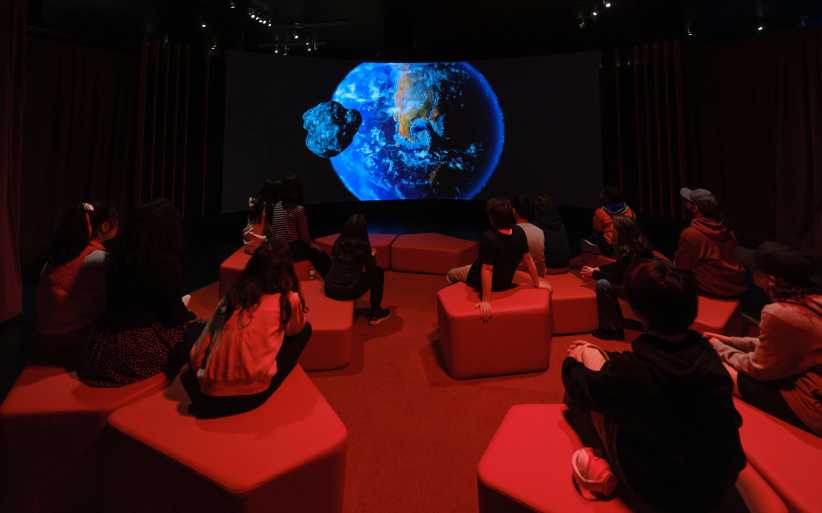
“What makes this exhibition so exciting is how much of the story we can now tell through science,” says lead curator Roger Benson. “Advances in paleontology and geochemistry have given us an unprecedented look at what happened before, during, and after the asteroid hit—including how ecosystems collapsed, adapted, and ultimately flourished again.”
The American Museum of Natural History paleontology houses an expansive collection of specimens, including more than 5 million fossil invertebrates and approximately 500,000 fossil vertebrates, one of the largest in the world. Museum paleontologists study the history of life on Earth through the discovery, analysis, and description of fossil remains of dinosaurs and other reptiles, mammals, birds, fishes, and invertebrates.
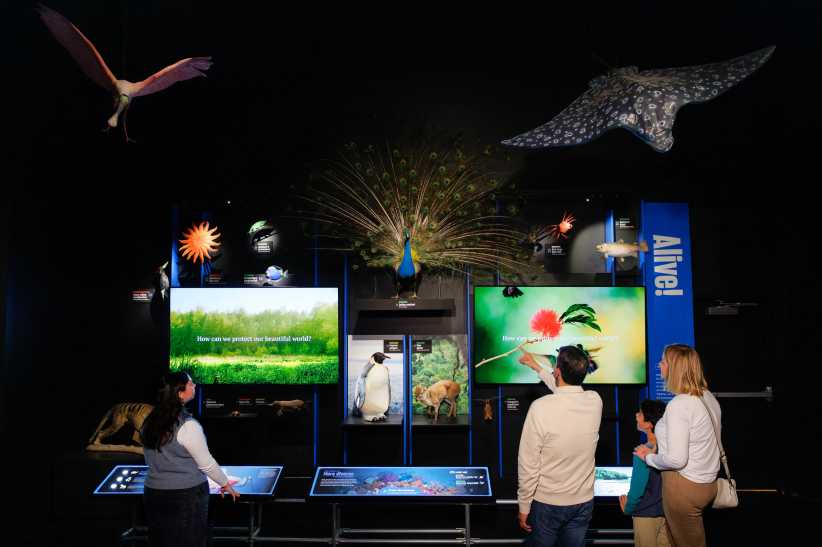
“Impact: The End of the Age of Dinosaurs” is now open to the public at the American Museum of Natural History, located at 200 Central Park West, daily 10 am to 5:30 pm. Tickets that include admission to Impact start at $30 for adults, $17 for children (ages 3-12), $24 for seniors and students, and free for museum members. Go to amnh.org to learn more.